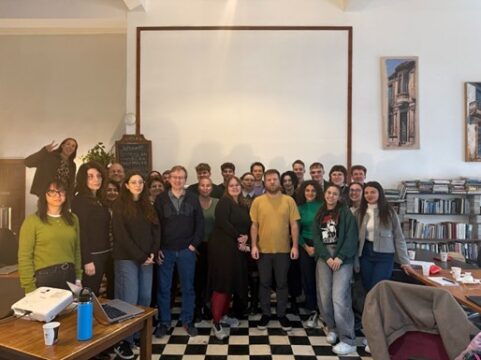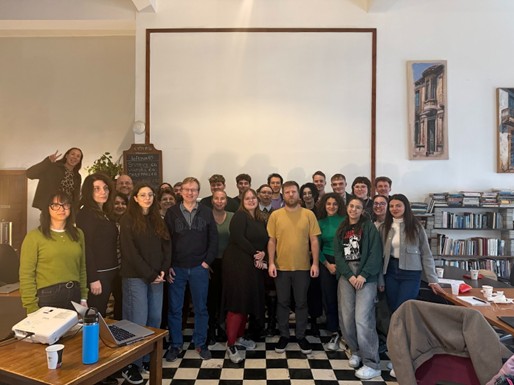
On the 9th of February, the Open University of Cyprus (OUC) team welcomed the Infotester partners University of Veliko Tarnovo (VTU) – Bulgaria, Tampere University of Applied Sciences (TAMK) – Finland and the Polish-Japanese Academy of Information Technology (PJAIT) – Poland, as well as the project coordinator Science4People (S4P) – Poland, to the Infotester4Education Winter School, in Nicosia, Cyprus.
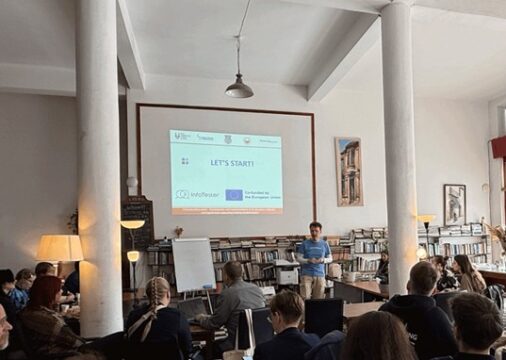
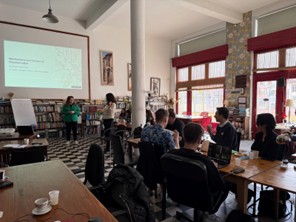
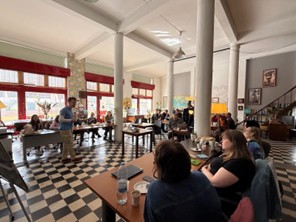
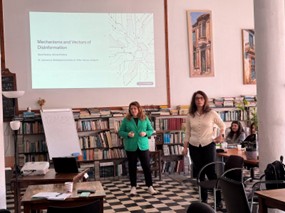
During 10 working days, intensive training was provided to students and staff/teacher participants, who arrived from countries across the consortium and locally. The program combined expert-led lectures, interactive discussions, hands-on training with tools and collaborative group activities, creating an engaging learning environment focused on combatting disinformation and enhancing media literacy and critical thinking. Participants had the opportunity to exchange perspectives, share best practices, and work together in an international setting, strengthening both their professional competencies and intercultural understanding. Beyond knowledge acquisition, the Winter School fostered meaningful connections and encouraged active participation, empowering everyone involved to become more confident, informed, and responsible contributors to their academic communities and society at large.
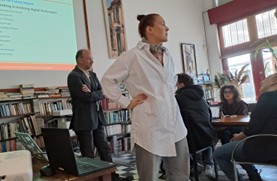
The program of the Winter School was as follows:

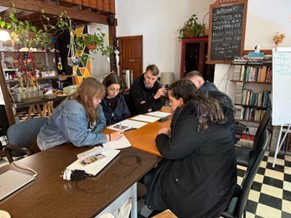
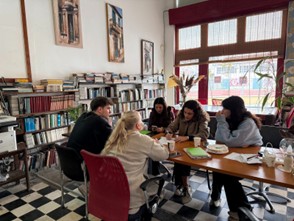
On Day 1, participants were grouped into diverse teams, carefully formed to ensure a balance of gender and cultural backgrounds. This initial team-building activity created an inclusive and collaborative atmosphere, encouraging open dialogue and mutual respect from the very beginning. Working together, each group developed a shared vision statement, outlining what they hoped to achieve during the Winter School and expressing their broader aspirations for combating disinformation, promoting media literacy, and strengthening democratic values in society. This exercise not only helped set common goals for the program, but also fostered a sense of ownership, teamwork, and collective responsibility among participants.
Throughout the 10 days, the teams worked intensively together, engaging in discussions, collaborative tasks, and scenario-based activities that deepened their understanding of disinformation and its impact on society. This sustained teamwork encouraged critical reflection, creativity, and peer learning, allowing participants to learn from diverse perspectives and experiences. On the final day, each team revisited and presented its original vision statement, reflecting on how their ideas had evolved and matured over the course of the programme. These final presentations highlighted not only the knowledge gained, but also the personal growth, strengthened cooperation, and increased confidence participants developed during the shared learning journey.
After each intense day of learning, working, and collaborating, participants gathered for lunch at the venue, To Yfantourgeio (the “Weaving Mill”), which provided a welcoming space for informal exchange and continued discussions. These shared meals became an important part of the experience, strengthening group cohesion and encouraging intercultural dialogue in a relaxed setting. In the afternoons, participants had the opportunity to explore the Old Town of Nicosia and its surroundings, discovering the city’s rich history and cultural heritage. These moments of informal interaction and cultural immersion complemented the academic program, enriching the overall experience and further strengthening the bonds formed during the Winter School.
On the final day, participants took part in a structured evaluation of both the course materials and their overall Winter School experience, sharing thoughtful feedback and reflections. Their input highlighted the strengths of the program while also offering constructive suggestions for improvement. This valuable feedback will support the consortium partners in refining the learning resources and enhancing the final version of the materials, ensuring they remain relevant, engaging, and impactful for future use. The evaluation process also reinforced participants’ sense of contribution and ownership, closing the Winter School on a collaborative and forward-looking note.